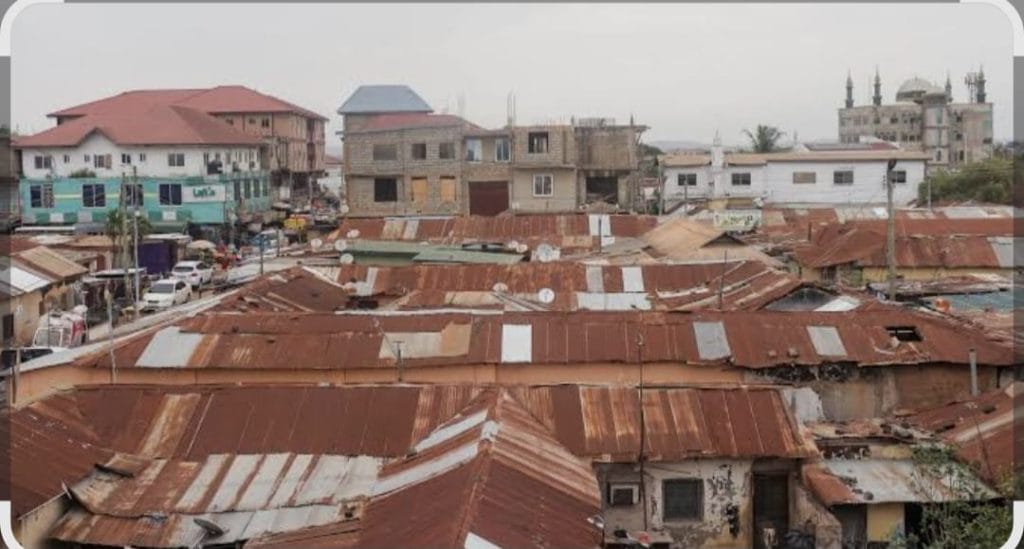
Before 1992, the political history of Nima was defined by its origins as a “stranger community” for migrants, operating initially outside colonial municipal controls and later becoming a vibrant, albeit neglected, hub for grassroots political participation and diverse ethnic and religious leadership. Nima, founded around the early 1930s by Malam Amadu Futa on land acquired from the Osu people, served as a settlement for Muslim migrants from the Northern Territories and the wider Sahel region.
-Key political developments in Nima before 1992 included:
1930s-1940s: Independent Settlement & Decentralized Control: Nima grew outside the Accra Municipal boundary, allowing it to act as a self-organized community. Residents initially relied on ethnic headmen for, protection, and representation, creating a system of patron-client relationships.
Post-WWII Growth (1947): The demobilization of African troops in 1947 brought many ex-servicemen, particularly from Northern Ghana, Nigeria, and other West African countries, to settle in Nima.
Colonial and Immediate Post-Independence Era: By the end of colonial rule, Nima was characterized by a balance between indigenous (Ga) landholders, migrant headmen, and formal government representatives.
Nkrumah Era (1950s-1960s): President Kwame Nkrumah was impressed by the enthusiasm of Nima’s residents during the struggle for independence and dubbed it “a city within a city,” planning to develop it into a modern estate, though this did not materialize after his 1966 overthrow.
Political Identity and Activism: Nima established itself as a significant, though sometimes marginalized, political force. It was a key location for grassroots political mobilization.
Provisional National Defence Council (PNDC) Era (1981-1992): Nima, along with Mamobi, became a politically dense area that, despite being a slum, played a role in the political life of the country, especially with its proximity to the seat of government.
Leadership Structure: The leadership in Nima before 1992 was often split between a “Chief of Nima” (typically a Fula/Hausa representing the settlers) and the Ga landlords who owned the land. By the late 1980s, the community was increasingly characterized by its heterogeneous population, serving as a melting pot of ethnic groups, which made it a critical area for both local and national politics.